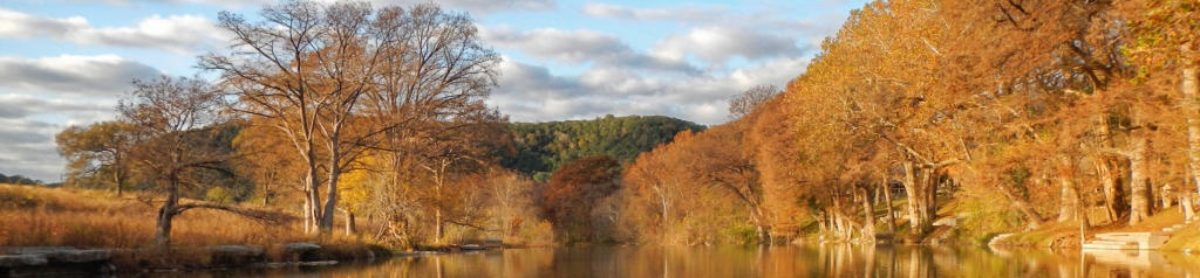
Oktoberfisch 2025

Dear Fishing Friends,We are excited to announce Oktoberfisch 2025, hosted by the Texas Hill Country Fly Fishers. This year, we’re bringing the event back to its roots—more river, more fellowship, and a laid-back weekend of fly fishing in the Hill Country.Event Details:

  • When: October 10–12, 2025
    (Main Event: Saturday, October 11)
  • Where: Morgan Shady Resort, Junction, TX

What to Expect:

  • Saturday will serve as the main event, but plan to come for the full weekend
  • Laid-back riverside camping and casting opportunities
  • Local guides and seasoned anglers sharing tips and stories
  • Plenty of room to explore, fish, and relax along the Llano River
  • A special mini-event: Panfish Bingo — grab a bingo card, fish your way through the squares, and earn bragging rights (plus a few prizes)

Lodging:

  • RV and tent camping are available at Morgan Shady Resort
  • Local hotels are also available, $5 day pass for Morgan Shady if staying off-site
  • Please note: you will need to make your own lodging reservations

We look forward to seeing you this fall for another memorable Oktoberfisch weekend.Tight lines,Forrest West, Vice-President Texas Hill Country Fly Fishers
Forrestwest@thcff.org     830-997-8040

See Oktoberfisch 2025 Event Registration Page

Knots for leaders

knot

In any type of fishing, the connection between you and the fish is only as strong as the knots you tie. This is magnified multiple times in fly fishing because by nature we fish with the thinnest of tippets.

Now, building a reliable leader to protect that tippet and turn over your fly requires the right knots—ones that balance strength, flexibility, and stealth. Here are five essential knots every fly angler should know when constructing a leader:

WHICH KNOT WHEN

1. Perfection Loop

Purpose: Creates a strong, reliable loop at the end of the leader for easy loop-to-loop connections with the fly line.

Why It’s Essential: The Perfection Loop lies straight and maintains nearly 100% of the line’s strength, ensuring a seamless transfer of energy during casting.

How to Tie It: Form a loop, wrap the tag end around the standing line to create a second loop, then pass the tag end between the two loops and pull tight.

Pro Tip: Ensure it is seated well, especially when using heavy monofilament.

2. Nail Knot

Purpose: Attaches the leader to the fly line securely without creating a bulky connection.

Why It’s Essential: The Nail Knot offers a smooth, streamlined connection that won’t disturb the surface film too much on a drift or retrieve.

How to Tie It: Lay a nail or similar object alongside the fly line and leader, wrap the leader around both the nail and fly line for about six turns, then thread the tag end back through the coils and tighten.

Pro Tip: Using a Nail Knot tool can simplify the process and ensure consistency.

3. Blood Knot

Purpose: This much-loved (and trusted) old classic is great for joining two sections of monofilament or fluorocarbon line of slightly varying diameter to create a tapered leader.

Why It’s Essential: The Blood Knot maintains a high portion of the line’s inherent strength and provides a smooth, slim profile.

How to Tie It: Overlap the ends of two lines, wrap one tag end around the other line for 4-6 turns, do the same with the other tag end, then pass both tag ends through the center loop formed between the wraps and tighten.

Pro Tip: Moisten the knot before tightening to ensure it seats properly and to prevent friction damage.

4. Surgeon’s Knot

Purpose: Connects two lines of differing diameters or materials, such as adding a steel shock tippet to a leader for predatory fish.

Why It’s Essential: The Surgeon’s Knot is quick to tie and retains a high percentage of line strength, making it ideal for on-the-water adjustments.

How to Tie It: Overlap the two lines, form a loop, pass both the tag and standing ends through the loop twice (for a double surgeon’s knot) or three times (for a triple surgeon’s knot), and pull all four ends to tighten.

Pro Tip: This knot is especially useful when time is of the essence, such as during a hatch when quick rigging is crucial.

fluoroflex-strong-tippet

Fluoroflex Strong Tippet

$15.95

sonar-leader

Sonar Leader

$14.95

hard-mono-saltwater-tippet

Hard Mono Saltwater Tippet

$8.95

5. Albright Knot

Purpose: Connects lines of different diameter and material. At a push, can also make for an on-the-water connection between fly line and leader if you have a welded loop failure. (More on making your own loops in an upcoming feature).

Why It’s Essential: The Albright Knot is versatile and effective for joining lines of different materials or diameters, providing a strong and smooth connection.

How to Tie It: Form a loop in the heavier line (fly line), insert the tag end of the lighter line (leader) through the loop, wrap it around itself and the loop 10-12 times, then pass the tag end back through the loop and tighten.

Pro Tip: Go slow on the tightening process. Ensure the wraps are neat and tight to prevent the knot from slipping.

Mastering these knots will not only enhance the strength and reliability of your leader but also improve your overall fly fishing experience. Remember, the best knot is the one tied correctly, so practice these until they become second nature.

Our longtime NBFF member and friend Ron Skarbowski passed away Tuesday

Our longtime NBFF member and friend Ron Skarbowski passed away last Tuesday per the following post from Jimbo Roberts on the Lease Members Forum:
 “This is the tough part about living a long life…. Ron Skarbowski passed away Tuesday and I just heard from his wife Donna. Ron wanted his ashes scattered at the 4th Crossing on the Guadalupe. I don’t know when this will happen yet, but if you would like to join us to send him off, you are welcome to join us. I will post more information here as details become available. I will miss his old-timer’s wit and cheerful banter while flyfishing together…. Jimbo Roberts GRTU V.P. of Fisheries Topic Link: https://members.grtu.org/forums/topic/ron-skarbowski.”
Pat was unable to send a group email from Big Sky, Montana while on vacation.  Big Sky was one of Ron’s favorite places to fish. We will keep you all informed on when Ron’s ashes may be scattered.

Chernobyl Ant

Chernobyl Ant

2 comments

Guest Blogger: J. Stockard Pro Jeff Rowley. Follow Jeff on Instagram.

The original Chernobyl Ant was developed in the early 1990s by Utah fly tyer Allen Woolley. It quickly gained fame for its buoyancy and effectiveness during terrestrial seasons.

This variant draws on modern materials and tying tips from Tim Flagler, offering a clean, high-floating profile with vibrant contrast and movement. It’s an excellent choice when big bugs—hoppers, beetles, ants—are crashing onto the surface.

Chernobyl Ant Recipe

HookAhrex NS118, size 6
ThreadSemperfli Classic Waxed 8/0, Pale Olive
TailSemperFlash (4 strands)

Body:

  • Semperfli Double Decker Foam, Black/Orange
  • Semperfli Kapok Dubbing, Black & Rust
  • Semperfli Grizzly Flutter Legs
  • Semperfli PolyYarn, White

OtherRiver Road Foam Grasshopper Body Cutter
Adhesive : Zap-a-Gap or similar

Step 1: Begin the Base

Chernobyl Ant 1

Secure the hook in your vise. Start your thread approximately 1mm behind the hook eye and lay a smooth thread base down the shank to just above the barb.

Tie in four strands of SemperFlash by folding them around the thread and securing them at the rear of the hook with firm wraps.

Step 2: Attach the Foam

Return your thread to the starting point. Cut a thin (1mm) strip of black/orange foam and tie it in at the front.

Spiral-wrap the foam back toward the tail using a touch of glue (Zap-a-Gap) on the shank for extra hold. Secure the foam with several tight wraps at the back of the hook, then trim off the excess.

Step 3: Add Dubbing & Body

Dub a small amount (~3mm) of black Kapok onto the thread.

Position the pre-cut foam body on top, pinch it into place, and secure it with progressively tighter wraps—firm enough to hold but not so tight that it cuts the foam.

Step 4: Add Legs & Wing Post

Loop in grizzly flutter legs on both sides. Tie in a small bundle of white PolyYarn at the mid-point of the body to act as a wing post for visibility.

Add more black Kapok dubbing behind the post. Pull the PolyYarn back and continue dubbing in front of it, making sure the legs remain properly positioned.

Advance dubbing along the shank—still in black—up to the ¾ point. Switch to rust Kapok dubbing and cover the remainder of the shank, stopping about 1mm behind the eye.

Step 5: Finish the Head Segment

Pull the foam forward and tie it down at the front, leaving the 1mm gap behind the eye.
Repeat the process: add another set of legs, another small PolyYarn post, and dub the front section with rust Kapok.

Whip finish neatly under the foam, securing everything in the space behind the eye.

How to Fish the Hopper Bite

By Son Tao

It’s Hopper Season—the time of year when grasshoppers, crickets, katydids, and beetles seem to be everywhere, especially near the water’s edge. If you’re a fly angler, you know this is prime time. Terrestrials start showing up in trout diets, and the explosive surface takes are unforgettable. But have you ever noticed some insects seem to jump or fall into the water for no obvious reason?

Turns out, not all of them are careless. Some are being controlled.

Meet Spinochordodes tellinii, a parasitic hairworm that turns ordinary grasshoppers into unwitting swimmers. Its goal? To manipulate its host’s brain and send it straight into the drink.

The Underwater Beginning

The life cycle of this hairworm begins in water, where its microscopic larvae float, waiting to be consumed by an unsuspecting terrestrial insect. This can happen when a grasshopper drinks contaminated water or eats another small organism that’s carrying the parasite.

Inside the insect, the hairworm grows silently and stealthily. Coiled tightly within the host’s body cavity, it can stretch to several times the host’s length, yet remain unnoticed. To the fly fisher’s eye, that hopper on the bank still looks like a juicy, twitchy meal.

When the Water Beckons

But at some point, the worm matures, and its mission changes. It can’t reproduce inside the host. It needs water.

That’s when it starts to manipulate its host’s behavior. Using chemical signals, the hairworm interferes with the insect’s central nervous system, altering its natural aversion to water. What was once a cautious grasshopper now starts wandering toward streams and ponds. Eventually, it jumps in—or falls in—almost like it was drawn by some unseen force.

As anglers, we see this behavior on the water and chalk it up to clumsiness or wind. But some of those land-based insects are the victims of parasitic mind control.

The Worm Emerges

Once the host hits the water, the hairworm makes its dramatic exit. Long, thread-like, and often startling to witness, it wriggles out of the insect’s body, killing it in the process. Free at last, it swims off to find a mate and continue the cycle.

Insect down. Parasite succeeds. Trout feast.

Why This Matters to Fly Fishing

For the fly fisher, understanding these natural rhythms and hidden ecological dramas can provide a serious edge. During late summer and early fall, terrestrials are an important part of a trout’s diet. Knowing that some of these bugs enter the water not by accident but by design helps explain the heightened feeding behavior seen on rivers and creeks during hopper season.

This also highlights why hopper patterns that land with a splash or flutter erratically can be so effective—they mimic not just the appearance of a land bug, but the unnatural, confused behavior of an insect under parasitic influence.

So the next time you’re tying on a foam hopper or watching trout rise to a beetle pattern, remember: some of those insects weren’t blown in. They were pushed by something inside.

How to Fish the Hopper Bite: Matching the Mind-Controlled Meal

Fly fishing during hopper season is all about imitating chaos. These insects don’t land softly and drift peacefully like mayflies. They’re twitchy, panicked, and often erratic—especially when they’re under the influence of something like Spinochordodes tellinii.

1. Choose the Right Fly

2. Consider Fishing a Dropper

Hairworms aren’t just fantasy—they exist. Trout sometimes key in on worms after seeing them emerge from a dying insect. You can simulate this by tying a red or pink San Juan Worm or Squirmy Wormy as a dropper beneath your hopper. It’s not always “pure dry fly,” but it’s deadly effective.

3. Presentation Tips

  • Plop It Loud: These insects don’t land like ballerinas. Let your fly hit the water with a little drama—it signals a vulnerable meal.
  • Twitch It: Every few seconds, give the fly a slight twitch. Mimic an insect in distress or trying to self-rescue.
  • Target Edges and Undercuts: Terrestrials usually fall in from bankside vegetation, so focus casts near grassy edges, overhanging limbs, and riffle-to-pool transitions.
  • Midday Magic: Unlike traditional hatches, hopper fishing is best from late morning through the heat of the afternoon when insects are active and wind may knock them down.

Choosing the Right Rod for Hopper Season

Casting large, wind-resistant hopper patterns—or hopper-dropper rigs—requires more than just finesse. You need a rod that can turn over bulky flies, punch through wind, and still deliver with precision near tight banks. This is where the 6 weight is king.

Here are a few top-tier choices that excel during terrestrial season:

Orvis Helios 6wt
A powerhouse with laser accuracy. The Helios 3D is ideal for punching foam hoppers into headwinds and laying them down gently. Its backbone handles hopper-dropper rigs with ease, and the tip action still protects tippet.

Scott Centric 6wt
Fast, responsive, and extremely intuitive. The Centric gives you power when you need it but has a buttery flex that keeps casts smooth and roll casts easy. A perfect balance for hoppers in driftless creeks or big Western rivers.

Winston Pure 2 6wt
For anglers who prefer finesse and dry-fly feel, the Pure delivers a soft touch. Ideal for those fishing single hoppers in calmer conditions. The slower action allows for delicate presentations in tight quarters.

Scott Session 6wt
Session rods are high-performance hand-crafted fly rods that blend some of Scott’s most acclaimed design approaches with their latest materials and technologies. This combination creates rods that bring together high line speed, exceptional loop control and accuracy with a light and lively feel in the hand.

Don’t Forget the Floatants

For effective dry fly fishing, quality floatants like High N DryLoon, and Frog’s Fanny Double Duty are top choices. These products help keep your flies riding high and dry on the water. High N Dry offers both gel and liquid floatants with great all-around performance. Loon has a range including Aquel (gel), Fly Dip, and Dust (Shake n Bake powder). Frog’s Fanny Double Duty combines a desiccant and floatant in one, perfect for reviving soaked flies, especially CDC patterns.

Nature’s Darker Currents

Spinochordodes tellinii is just one example of parasites that alter host behavior to complete its life cycle. Others include Toxoplasma gondii, which makes rodents unafraid of cats, and Ophiocordyceps fungi, which turn ants into zombie spore spreaders.

These interactions remind us how complex, interwoven, and sometimes unsettling the natural world can be. As anglers, we’re not just participating in a sport—we’re stepping into a web of ecological relationships older than we can imagine.

So enjoy Hopper Season. But know that beneath the splashy takes and twitchy strikes lies a story even more fascinating than the fish that eat the fly.